
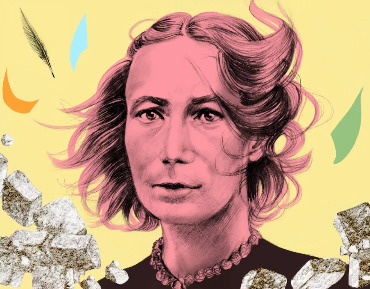
Radical: Read About How Louise Fought for the Rights of the Downtrodden
Louise Michel called herself many things over the course of her life: a schoolteacher, a writer, a revolutionary, an anarchist. What bound these identities together was her unwavering loyalty to those pushed to the margins of society. Again and again, she aligned herself - emotionally, practically, and politically - with people crushed by poverty, power, and injustice.
This article accompanies The Fight for Fair Wages, one of the short stories in the Louise Michel series. That story draws inspiration from Louise’s lifelong commitment to economic justice, especially for women - a commitment that shaped her politics long before the Paris Commune and remained central to her thinking throughout her life.
A Lifelong Identification with the Oppressed
In her memoirs, Louise Michel does not describe a sudden political awakening. Instead, she presents her radicalism as something that grew slowly and organically. Raised in rural Haute-Marne, she saw early how hard people worked for very little reward, and how kindness, talent, and effort were rarely matched by security or dignity.
This awareness stayed with her. Whether she was teaching, organizing in Paris, or living in exile, Michel returned to the same moral insight: society was structured to benefit a few at the expense of the many, and to remain neutral in such a system was itself a form of complicity.
Her writing is filled with attention to people whom society preferred not to see - workers, women, the poor, the imprisoned, the colonized. She did not treat them as abstract “causes,” but as human beings with voices, lives, and stories.
Fair Wages and Women’s Work
One of the injustices that most outraged Louise Michel was economic exploitation, especially the chronic underpayment of women. Women labored long hours - in homes, workshops, schools, and factories - yet were paid far less than men for work that was just as essential.
Michel understood this as a structural injustice. Low wages kept women dependent, vulnerable, and excluded from real autonomy, even as their labor sustained families and entire economies.
The Fight for Fair Wages is inspired by this part of her life. Rather than presenting economic justice as an abstract idea, the story draws from Louise Michel’s deep engagement with working people and her insistence that dignity and survival should never be in conflict.
Radicalism Without Detachment
Louise Michel’s radicalism was never cold or theoretical. It grew out of everyday realities - hunger, overcrowded housing, unpaid labor, children forced into work. She distrusted systems that treated people as numbers and preferred to begin with lived experience.
During the Paris Commune of 1871, this approach became visible on a larger scale. Michel supported efforts to expand education, challenge inequality, and improve the lives of workers and families. She worked closely with women’s groups, spoke publicly, and rejected the idea that injustice was inevitable.
After the Commune was crushed, she did not retreat. Exile and imprisonment only deepened her conviction that real justice required more than small reforms - it required a fundamental change in how power and resources were distributed.
Why This Story Matters Now
I was drawn to Louise Michel’s radicalism because it continues to speak directly to the present. Questions of fair pay, gendered labor, and economic precarity remain unresolved today. Her belief that exploitation is built into systems - not simply the result of bad individuals - still speaks with unsettling clarity.
The Fight for Fair Wages is my attempt to explore that spirit in story form. Through moments of tension and decision, it reflects Louise Michel’s fierce commitment to equality, her loyalty to working people, and her conviction that justice is something you act on, not just talk about.
Louise Michel did not fight for the downtrodden because it was fashionable or strategic. She fought because she believed, deeply and uncompromisingly, that a world built on injustice had no moral legitimacy.
That refusal - clear-eyed, compassionate, and radical - is at the heart of her life, and of this story.